

None of us shaped the world we were born into: not us, not our parents, not our grandparents before them. We arrived unceremoniously into an arrangement already in motion, its borders long drawn, its hierarchies long settled, both its true and false stories already authored and assigned. The language through which we think, the values we unconsciously treat as natural, the institutions we navigate without pausing to question their foundations – none of it was chosen by us. All of it was inherited, adopted, and absorbed as though it were the texture of reality itself. The most stubborn and corrosive illusions of human life is this assumption: that because this is the world we found, it must therefore be the world that simply is, that its present configuration is natural and its permanence is therefore inevitable.
However, it was never natural, and it was never inevitable.
As comfortable as such an illusion might feel, it is not accidental. It is carefully manufactured and vigilantly maintained by those who profit most from the present arrangement: the powerful who confuse the inheritance with right, the ideologically accommodating who have made their peace with familiarity and framed their surrender as “wisdom”, and those whose fear of change runs so deep that they have learned to dress it in the respectable apparel of “tradition” and “caution.” These are the self-appointed guardians of a world they didn’t build and can’t coherently justify, and their most reliable instrument of control has always been the persuasion that no meaningful alternative has ever been possible, that those who imagine otherwise are naïve at best and dangerous at worst – and yet every world that has ever existed was built by people who once stood right where we are now: inheriting an arrangement they didn’t choose, and deciding (consciously or otherwise) what to do with what they found.
This is why the study of history goes far beyond mere intellectual indulgence. Through the final revelation, God presents us with a series of living historical case studies as active evidence that the world has always been in the process of being made and remade by human hands under His sovereignty – whether they acknowledge it or not. These accounts open us to civilisations unlike our own, communities that organised themselves around covenantal obligations rather than ethnic allegiances, economies structured on principles of circulation rather than accumulation, legal cultures whose legitimacy derived not from the coercion of the state but from a shared moral accountability before the Lord of the cosmos. Some of those worlds endured a generation and others persisted across a millennium. None of them lasted forever, because nothing does, but every order carries within it both its beginning and the conditions of its ending.
What history insistently teaches is that the arrangement we currently inhabit is contingent. It was assembled through human choices made under specific pressures at particular moments in time, and what human choices have assembled, human choices can also dismantle and rebuild. The sheer diversity of how people across the centuries have loved, traded, governed themselves, mourned their dead, and understood the nature of existence should stoutly dissolve any assumption that what we have today represents the only possible configuration of human life and society. To believe otherwise is not, as its proponents like to suggest, a form of conservatism. It is complete surrender of the intellect.
Now, if this is true of the material world then it is all the more true of what we have come to call “religion.” We didn’t choose our beliefs, however pristine or ancient one might imagine them to be. They were, more precisely, chosen for us and shaped around us by forces with interests of their own, and those interests definitely weren’t aligned with our freedom or our flourishing.
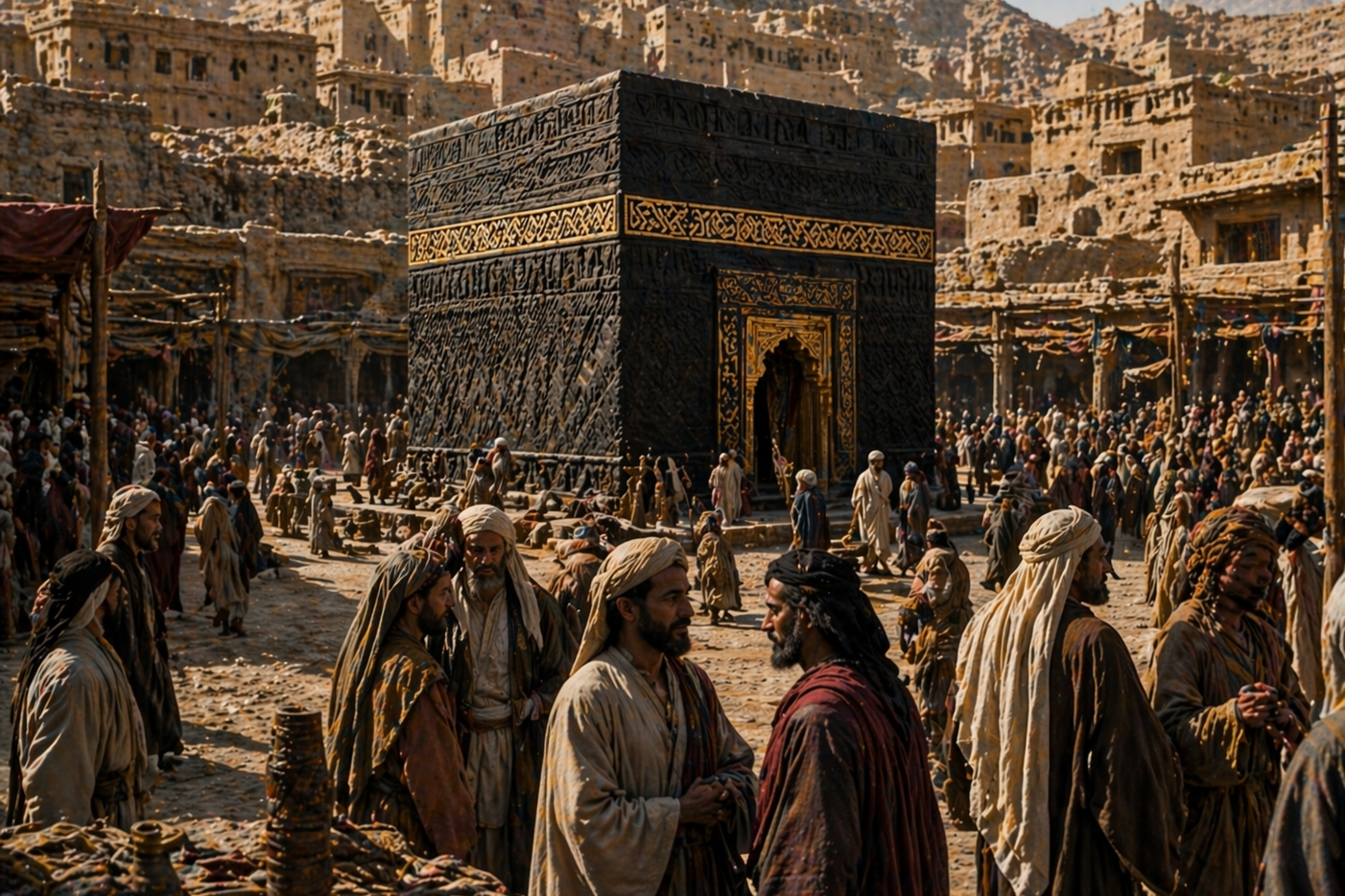
The version of Muslimness that most people in the Western world inhabit today is not an organic transmission of the Ishmaelite covenantal legacy as most like to believe. It is, in very substantial part, a colonial product, a kind of Frankenstein assembled from the dismembered parts of an ancient covenantal tradition and both reshaped and reanimated according to the needs of an empire. When the British arrived in the Indian subcontinent, they encountered something they struggled to process through their existing categories: a living covenantal code, the legacy of the Ishmaelite stewards expressed through Mughal imperial culture. Rather than engage it on its own terms, they reclassified it entirely. Schooled in Enlightenment rationalism and trained in the bureaucratic management of subject peoples, the colonisers severed existential understanding from the real world and called it “religion”, removed law from the ethical ordering of society, and created identity from theology. The result was that the Ishmaelite legacy, which had always understood itself as the restoration of the Abrahamic covenant and the continuation of its long moral arc, was pancaked into a sociological category. “Musalman” became, in the colonial imagination, something directly comparable to “Hindu”: an ethnic-communal label for a body of customs and a class of people rather than designating a living covenantal obligation between human beings and the Lord of history.
The British then codified this horrid reduction into Anglo-Muhammadan Law, with the surgical precision of administrators who understood exactly what they were doing, extracting the covenantal reasoning of the Proclamation that had given jurisprudence its moral spine and replacing it with something governable and inert. Then in what was perhaps their most strategic move, the text of the Proclamation itself was sullied. The translations produced under the Raj: Sale, Rodwell, and most consequentially Yusuf Ali whose influential rendering was backed by colonial institutions, mediated God’s message through the familiar frameworks of Christian theology and secular rationalism. “Islam” became “Mohammedanism,” a naming that performed its own type of violence, repositioning the final custodian of the Abrahamic covenant as the founder of a religion rather than the concluding and sealing figure in the oldest restorationist tradition known to humanity. The ancient, living dīn qayyim was thus successfully recast as an ethnic culture, and what was meant to be a universal covenant with God was reclassified as an ethnic community’s attachment to its customs.
When South Asian migrants arrived in Britain and North America from the 1940s onward, they carried this recast identity with them, and one can hardly blame them as it was the only frame available to them in the English language and within the English-speaking world. The same transfiguration had already occurred across West Africa, where the Musalman identity had been similarly extended, similarly flattened and similarly named! The Middle East bore its own distinctive wounds with colonial thinking of the British and French variety intersecting with the rise of communist-inflected Pan-Arab nationalism to produce a region alienated from its own Semitic covenantal inheritance by two competing foreign ideologies at once. Arab migrants arriving later in the West and negotiating the same English-language intellectual infrastructure simply adopted what was already there. Today, the Friday pulpit, the translated hadith collections, the popular books and the broader public discourse, all of it operates within the paradigm the European colonisers carefully constructed. Nearly nothing in the English language is immune. Even those of us who speak Arabic import the Arabic we hear into the colonial framework that has shaped our cerebral processing. The Ishmaelite covenant was successfully reframed as a sociological identity, and successive generations have received this colonial construct as though it were the original inheritance, as though the frame and the thing it replaced were one and the same.
It’s an inheritance, and like all inheritances, it demands scrutiny rather than simple assumption.
“It is God who brought you out of your mothers’ wombs knowing nothing, and gave you hearing and sight and minds, expecting you to be thankful.” (16:78)
We arrive empty and are shaped entirely by what surrounds us in those formative years when we have no tools to resist what is poured into us. The question that God places before each successive generation is therefore whether those faculties will be turned on what we have been given, examined with rigour and honesty, or whether we will simply absorb our inheritance uncritically and then mistake passivity for “gratitude”, inertia for “piety”.
The test of the Exodus Israelites is the test of every generation that inherits a distorted or imbalanced world. These were a people who had been liberated from servitude, and who discovered, to their own discomfort, that freedom was more unsettling than bondage had ever been. Even when it crushes a people, the known carries the seductive comfort of familiarity. Even when it leads toward dignity and covenant fulfilment, the unknown demands a kind of courage one can’t always feel in the moment of choosing. And so the Israelites looked back longingly to the cucumbers and lentils of Egypt, drawing from Moses the rebukes: “You want to trade what is better for what is worse?!” The sting in that question lies in what it reveals: it was a question about the capacity to want something proportionate to the subjects God had made them to be, about whether the imagination of a liberated people could reach beyond the menu of their captivity.
There will always be those who push back against the very change that would liberate them, who will interpret their resistance as “discernment” and their fear as “fidelity”. They will dress their discomfort in religious language and their attachment to the familiar in appeals to precedent and the authority of those who came before. They are not the custodians of the Abrahamic restoration, instead they are its effective jailers, and their sincerity where it exists, doesn’t exactly alter the function they serve. But the Prophet made a promise that ensures they’ll never have the final word:
“In every generation, those of upright character among them will bear this knowledge of the code, repelling the distortions of those who overstep, the fabrications of those who corrupt, and the misreadings of the ignorant.” (Ahmad, al-Baihaqī)
Three threats are named: The over-steppers distort, the corrupters insert, the ignorant misread. All three are operative today as they have been in every age, taking only the particular forms that each era makes available to them. Those who overstep have turned the covenantal code into a theatre of identity conflict and ritualism. The corrupt have perpetuated the colonial framing with such consistency and institutional confidence that it now passes for religious leadership and genuine scholarship. The ignorant, many of them perhaps sincere and well-meaning, simply transmit what they have received without the tools or the willingness to interrogate it. Be wary: transmission without examination is sleepwalking in devotion’s clothing.
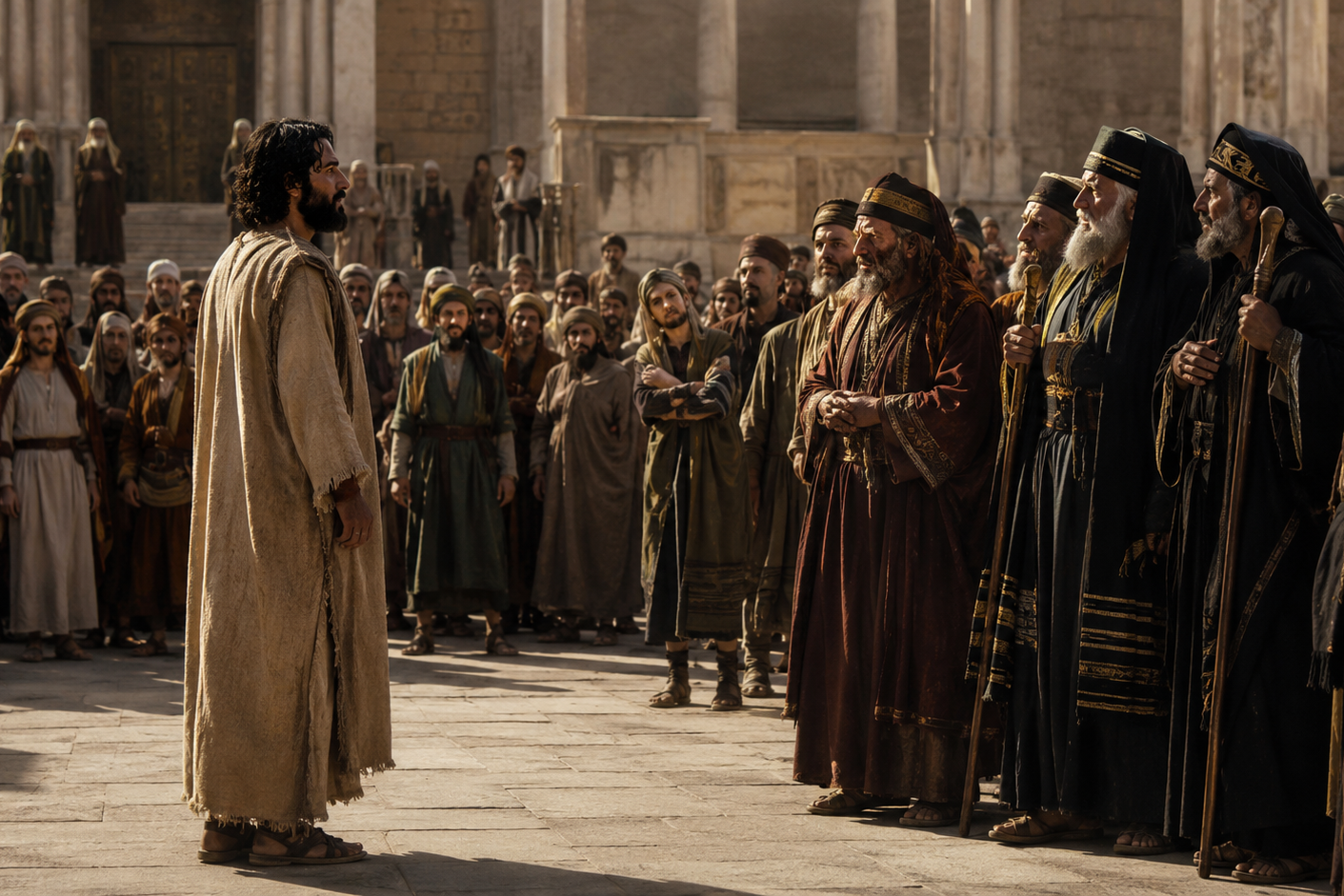
The second chapter of the Proclamation, verses 75-78, is instructive here in ways that cut uncomfortably. The Israelite scribal class had heard the word of God and then, having reasoned it through and understood it clearly, chose to misrepresent it deliberately – theirs was a choice rather than a mistake. Meanwhile the common people, uninformed and entirely dependent on what they had been misfed, were left with nothing more than vague hopes and inherited assumptions about who they were what God might want of them. Satan afflicted them with self-delusions that left them to believe, quite baselessly, that they were special for simply being Israelites (ethno-supremacy). The lesson that soberingly emerges from this point is that there was little realistic hope for transformation from a populace shaped by those twin dynamics, and God points out that the Ishmaelites were naive in expecting such a people to ever give them honest credence. So what does this say of modern identities that very palpably traverse the same path?
Nearly a century has now elapsed since the concentrated machinery of the colonial empire reached its historical apex but its categories remain firmly installed as though the dissolution of the formal empire was just administrative rather than conceptual. Its architecture persists in organisations, translations, theological assumptions, and in the very language with which people understand themselves. The empire contracted and eventually withdrew in formal terms but the paradigm it installed didn’t follow it home. That gap, between the formal end of colonial power and the uninterrupted persistence of colonial thinking is the space that our generations occupy and must reckon with honestly. The tradition itself has always known this was coming:
“God sends this community, at the head of every century, those who renew the code for it.” (Abū Dāwūd)
Renewal is not novelty, nor is it rebellion for its own sake. It is a covenant obligation woven into the very logic by which this ancient tradition has always sustained and reconstituted itself across the turbulence of history. The question before us is not whether renewal will come but whether we will number among those who carry it forward, or be counted instead among those who placed themselves in its way.
We did not choose the world we were born into, nor the Frankenstein of a tradition that was handed to us in place of the original. But we aren’t passive recipients either, and the very act of treating ourselves as such is itself a choice made daily, and with consequence. We have hearing, sight, and mind, and these are not decorative. They are instruments of moral agency, and God holds us accountable for what we do with them. The world is the way it is not because it couldn’t have been otherwise, but because of choices made by people who came before us – and it will be what it will be in a hundred years because of choices being made now, among them ours as individuals.
Related Posts

1 Comment
Leave a Reply to Umm Usman Cancel reply
This site uses Akismet to reduce spam. Learn how your comment data is processed.
“ These were a people who had been liberated from servitude, and who discovered, to their own discomfort, that freedom was more unsettling than bondage had ever been.”
I never truly understood the meaning behind their longing until now. It sounded ridiculous to me. Subhanallah familiarity is powerful.