

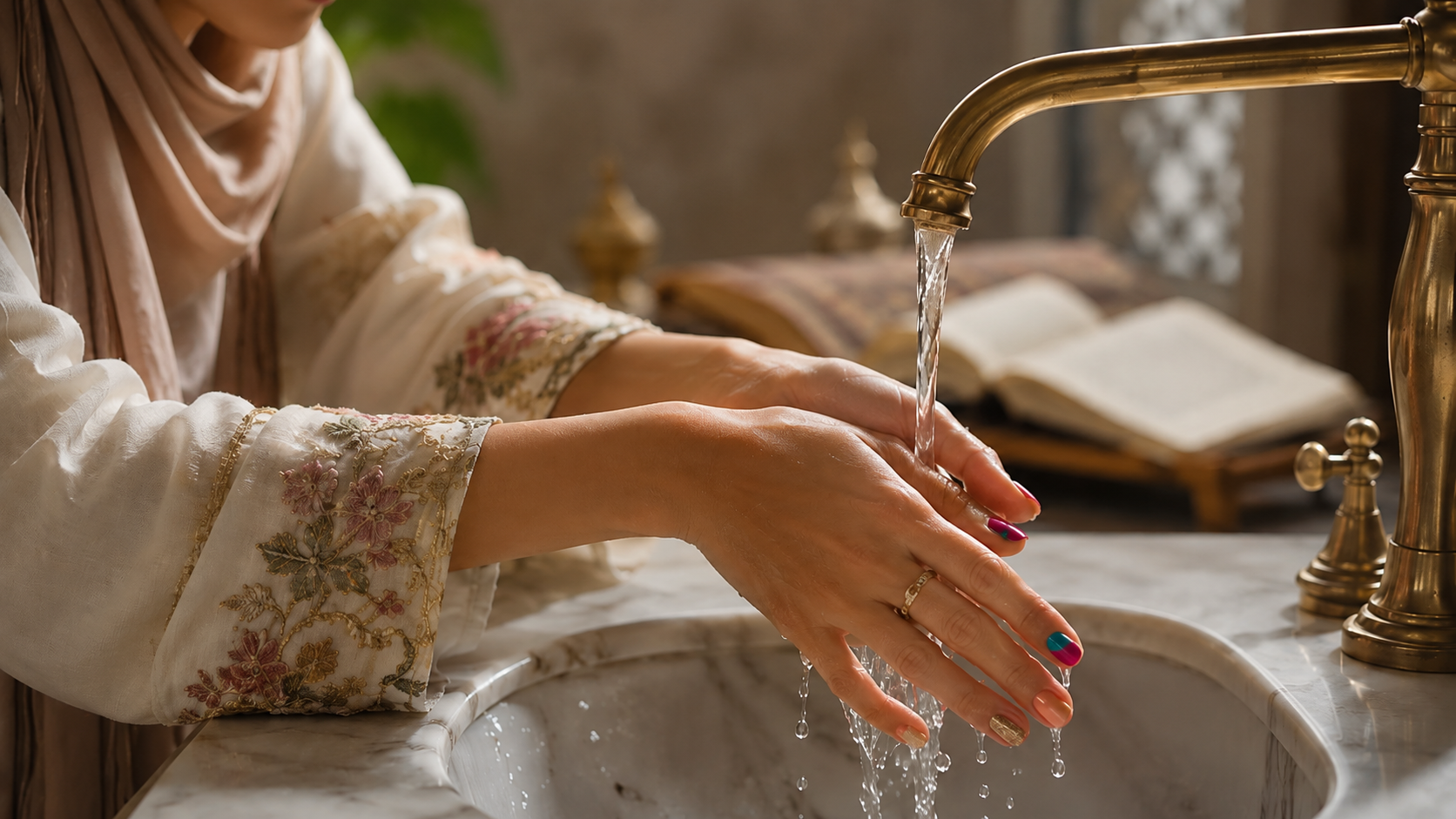
Nail Polish and Ablution: a colourful conversation
The validity of ablution for women wearing nail polish has been a persistent question posed to jurists in the modern era given that nail polish is a relatively new phenomenon. My aim here isn’t to negate variant views - nothing significant is lost by not wearing nail polish all the time and I feel both sides of the debate have reasonable positions.
This is not a legal response but a brief informative article, primarily for my community, to offer some clarity around the issue. I’m cursorily providing both sides of the debate with two different hats as any scholar ought to be able to do.


Music: Some facts of the matter
Summary: The article argues that music is generically permitted in God's law, falling into the same category as other neutral human pursuits. The default covenantal principle is that everything is lawful unless explicitly prohibited, and no such prohibition exists for melodious sound. The commonly cited Quranic verse (31:6) refers to distracting speech, not music, and the prohibitive hadith address a wider culture of indecency rather than music itself. The claim of scholarly consensus against music is flatly rejected — numerous early companions, Madinan jurists, and later scholarly giants either practised music or explicitly permitted it. The people of Madinah maintained it as a living cultural norm. The author's practical conclusion is straightforward: music is neutral, and its permissibility or otherwise depends entirely on its effect on the individual. Where it leads to harm, it becomes inadvisable; where it is beneficial, it is positively good. The insistence on blanket prohibition, the author suggests, owes more to cultural and sectarian bias than to honest engagement with the sources.

Washing hair after sex
I have been repeatedly asked by numbers of believing women as to the covenantal law concerning bathing to remove sexual impurity (janābah), with the concerns around frequent bathing and the impact it can have on hair health. Problems are exacerbated in hard water areas, not only to hair but to skin, and often skin is irritated either to frequent exposure, or the elongated periods spent in the shower detangling hair under running water. For some hair types (such as particularly curly hair) repeated showers can be quite costly having to saturate hair with conditioning products to provide enough slip to reduce hair breakage.
Even after having a bath, there are persistent issues. Certain hair types can take a significant period of time to dry, and if there is a frequent need to bath due to an active sex-life or recurrent nocturnal emission, persistent wet hair can lead to illness.
These concerns are in no way modern, approximately 1400 years ago it reached Ā’ishah that Abdullāh b. Umar advised women to untie their hair if they bathed. Her response was the same as we might hear today: “How surprising of Ibn Umar! He directs women to untie their hair if they bath, he might as well direct them to shave their heads!" (Muslim)
To be sure, God has said concerning standing for prayer, "And if you are junub (sexually impure), then cleanse yourselves." (Proclamation 5:6), and to not come near salah "if you are junub (sexually impure) - though you may pass through the mosque - not until you have bathed." (Proclamation 4:43)
However, what does bathing constitute in regards to washing the hair in this context, that is, the bathing of sexual impurity (ghusl al-janābah)? The Prophet's wife Umm Salamah, asked: "Messenger of God, I'm a woman who plaits my hair, must I untie it to bathe from sexual impurity?" He said: "No, it merely suffices you that you apply three handfuls on your head then pour water over you (i.e the rest of your body) to purify.” (Muslims and Ahmad)
According to the hadith, the following suffices for purification from janabah:
- Three handfuls of water poured over the head, and then the rest of the body saturated with water;
- Plaited hair may remain plaited; hair does not need to be untied;
- There is neither a requirement to rub water into the hair (or its roots) nor saturate the length of the hair.
Now before explaining the bulleted points above, a preliminary point must be made especially for those who might have multiple baths within a very short space of time. It is not obligatory immediately after an act of intercourse; it's a condition for those who wish to engage in certain actions such as prayer, circling the Ancient House and handling the scriptures. It is not necessitated merely to talk to another person or to sleep, nor is the state of impurity transferred from one human to another by touch - the Prophet said: “the believer does not pollute (others).” (Al-Bukhāri and Muslim, narrated by Abu Hurairah)
Many of the aforementioned issues typically occur due to idea that the entire head must be saturated with water and rubbed, or that the length of the hair (to the tips) must be washed. To note, some of the assumptions are understandable given the hadith of Alī b. Abī Tālib: “I heard the Messenger of God say: whoever leaves a spot of hair from sexual impurity which water does not reach, then God shall do such and such with him from the fire.” (Ahmad, Abu Dāwud, al-Tayālīsi, and al-Bazzār.) Furthermore, the hadith of Ā’ishah offers us a general description: “If the Prophet bathed due to ritual impurity he would begin by washing his hands, then he would pour with his right hand over his left and wash his private parts. Then he would perform ablution for prayer. Then he would take water and enter his fingers into the roots of his hair, until he believed he had poured over his head with three handfuls. Then he poured water over his entire body, and then washed both feet.” (Al-Bukhāri and Muslim)
However, the hadith of Jubair b. Mut’im offers another perspective: “We were discussing the bath of janābah with the Messenger of God and he said: As for me, I take two handfuls of water and pour it over my head, thereafter I pour (water) over my entire body.” (Al-Bukhāri and Muslim) The chief Hanbali jurist Majd al-Din b. Taymiyyah wrote in al-Muntaqā, ‘It is evidence for those (jurists) who neither necessitate massaging, nor gargling, nor sniffing.’
But must the general hadiths of Alī and Ā’ishah apply? A key hadith used by jurists to argue that they do not is the narration of Umm Salamah, the wife of the Prophet, who said, “I said: Messenger of God, I am a woman who plaits my hair, must I untie it to bathe from sexual impurity? He said: No, it merely suffices you that you apply three handfuls on your head then pour water over you (i.e the rest of your body) to purify.” (Muslim and Ahmad) Based on this hadith, Ahmad b. Hanbal concluded that a woman need not untie her hair if bathing from sexual impurity (but should do so for her menses). The hadith of Umm Salamah relates to janābah whilst the Prophet said to Ā’ishah who was menstruating: “untie your hair and comb it (through).” (Al-Bukhāri)
Generally, it is the default position to untie the hair so as to ascertain water reaching that which is obligatory to wash but there are clearly allowances made for bathing from sexual impurity since it occurs often and causes both difficulty and harm. To reflect this, we find that ‘it reached A’ishah that Abdullah b. Umar was directing women to untie their hair if they bathed. She said: “How surprising of Ibn Umar! He directs women to untie their hair if they bath, he might as well direct them to shave their heads! The Messenger of God and I would bath together and I would not pour over my head more than three handfuls.’ (Muslim) The notion of ‘shaving their heads’ is predicated on the fact that frequent washing can lead to hair loss from breakage and tangling.
A similar point of view was also considered for washing the length of the hair to the roots. Whilst some jurists have viewed it as obligatory relying on the hadith “beneath every hair is janabah, so wet the hair and cleanse the skin” (Abu Dāwud and al-Tirmidhi), it has also been opined that it isn't obligatory to wash all of the hair given the response of the Prophet to the concern of having hair in plaits, “It suffices you that you apply three handfuls on your head”. As Ibn Qudāmah pointed out, ‘This does not usually soak plaited hair, for if saturation were obligatory, it would then (also) be obligatory to untie the hair so as to know that saturation had been achieved.’ (Ibn Qudāmah, al-Mughni)
An interesting point of consideration specific to janābah is whether there is a requirement to wash the hair at all. Ibn Qudamah emphatically questioned the assumption arguing the analogy that in covenantal law, the hair isn't considered a part of the animal (with humans considered articulate animals – hayawān natiq) given that hair does not become impure by death, nor is there life in it, nor is ablution negated by a man touching a woman’s hair, nor is a woman divorced by her hair (i.e. “I divorce your hair!”). Given the legal distinction between the two, it is not obligatory to wash it just as it wouldn’t be obligatory to wash her clothes merely for having worn them during sex. Ibn Qudamah’s response to the hadith used by interlocutors “drench the hair” is persuasive: al-Hārith b. Wajīh alone narrates the hadith, and his narrations are weak when narrating from Mālik b. Dīnar.
Alternatively, it may be argued that the eyebrows and eyelashes must be washed so why not the hair on the head? I assert that eyebrows and eyelashes are washed by necessity in order to reach the skin underneath which constitutes the face for which there is no concession for partial saturation; those parts of the face are only reached by washing the hair that sits on top. It essentially goes back to the maxim: that which is necessarily required to fulfill an obligation also becomes obligatory.
To be clear, the hadith of Umm Salamah is pivotal for an overview for it proposes the following:
- the prophet took into consideration the circumstances of women on this matter
- that three handfuls of water over plaited hair suffices although it neither saturates the entire head nor the length of the hair.
As indicated from the prophetic case law, faithful women are to purify themselves but without harm or injury to person, and without obstructing the needs of intimacy. A divine wisdom that becomes clear is that the purpose for frequent baths should not become the cause of subsequent troubles: the loss of desire in the husband due to the hair loss of his wife. Additionally, God has limited the possibility of covenantal law being used as the excuse to impede the rights of spouses. In order to maintain sexual attraction but also ensure purity, God lightened the burden on a woman and offered her a normative approach that wonderfully balances the benefits of intimacy with purifying for devotions to the Most High.
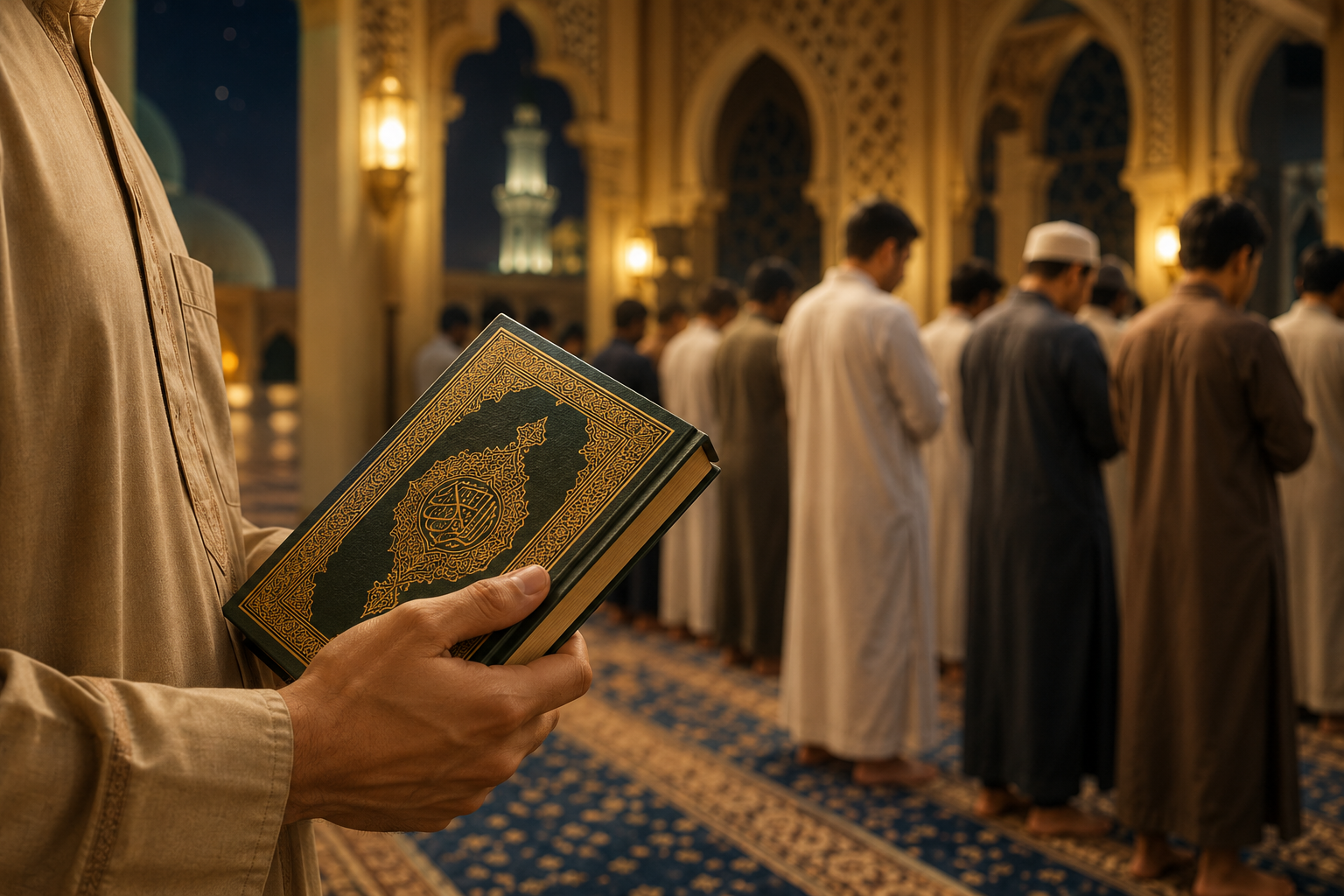
Can we hold a mushaf and perform tarāwīh/qiyām?
I strongly hold it to be perfectly permissible to do so. Ā’ishah b. Abī Bakr, the wife of the Prophet, would have her servant Dhakwān lead her in prayer from the mushaf (al-Bukhārī). There also doesn’t seem to be any explicit prohibition from doing so.

"What is the ruling on…?” or "What's the strongest opinion…?”
Summary: The article challenges the common assumption that religious questions have one definitive answer. Most procedural matters in God's law are genuinely open to multiple legitimate interpretations, meaning that when someone asks "what is the ruling on X," they are really asking for a jurist's informed opinion — not retrieving an objective fact. Only a limited set of decisive matters carry definitive rulings. Good jurisprudence, the author argues, requires locating individual rulings within the broader covenantal framework rather than treating each in isolation. A ruling divorced from its wider purpose is like a brick without a wall — technically present but structurally meaningless. Practically, this means people should seek out genuine intellectual aptitude rather than social media popularity, rhetorical flair, or sectarian familiarity. Both the instinct toward maximum restriction and the instinct toward maximum leniency can be equally corrupted by group loyalty or self-interest rather than honest engagement with what God actually intends. The mark of a trustworthy jurist is rigorous knowledge of the sources, coherent reasoning, sensitivity to context, and the humility — as al-Shāfiʿī put it — to hold one's own conclusions firmly while remaining open to a variant perspective.