


Dear University Students
I'm writing this hoping it lands in the way it's intended. We've been where you are as university students navigating western life, and we've lived through what comes after it too. That's really the whole point of having people a few chapters ahead of you: to hand you something like a cheat sheet so you can find the most efficient and rewarding path forward without taking all the longer routes we did. So with that in mind, here's what's worth keeping close:
You know less than you think, and that's fine
Most of you are between 18 and 23. The overwhelming majority have no grounding in the covenantal basics, no coherent study of God's final Proclamation, and no real engagement with God's constitutional law. On those subjects, you likely know less than you do about the GCSE topics you studied a couple of years ago. What you do have is inherited culture and the influence of populist speakers which is mostly identity politics dressed in religious clothing. That's not intended as criticism, it's simply where most people start. The humbling truth is that the vast majority of yesteryears' university students find that most of what they thought they stood for as students, whether religious or political, they deeply question by the end of their 20s.
Faithfulness to God is lived, not debated
Submission to God through adherence to His code isn’t an academic exercise, it’s life! The prophetic companions didn't spend their time in theological arguments, they lived their faithfulness through daily life. The purpose of God's law is to effectuate God's order in the real world. Many of you are, perhaps for the first time, tasting independence but even then you're still cushioned by student loans, campus life, and a parental safety net not so far behind. The next two decades (and especially as your kids grow into teenagers) will bring joys and difficulties that will reshape you in ways you can't currently imagine. Your convictions will evolve and your priorities will shift. Welcome the journey. If what you're thinking, saying, or doing isn't making you kinder, more gracious, healthier, and sharper in your thinking, it isn't truth: it's a problem. The conversations you're having right now aren't really debates; they're uninformed opinions competing with other uninformed opinions. The single most valuable thing you can cultivate at university is intellectual humility. Be curious. Be fascinated. Don't be angry.
You get played
A great deal of what circulates in university Islamic societies is driven by sectarian and political agendas operating well above your level. The salafi-sufi arguments, the ideological and political feuds, they're largely superficial and have been running on the same script for decades, limiting students before you and shaping them in ways they later regret. A handful of Quranic verses or hadith that are selectively deployed can feel like profound religious knowledge when you have little basis for comparison. It isn't. It's a fragment, and fragments are greatly misleading.
Be honest about who is advising you
Many of the speakers who present themselves as guides for your life have never lived anything close to it. Many didn't attend British universities. They didn't grow up in your context and, by and large, they still don't. Often, they operate in culturally insular environments entirely disconnected from the world you actually inhabit and will have to compete in. They can't exactly teach you to navigate difficult situations because they've never had to. They can't offer you markers of genuine success, material or otherwise. What they can do, and often do, is pull you into irrelevant feuds that consume the time and energy you need to grow into capable, emotionally resilient adults. You don't need ideologues. You need highly educated, informed and experienced cultivators. When you leave university your moral mission is to take God's covenantal order into the world, informed by divine guidance and decency. They don't live in wider society, often they're in an ethnocultural bubble. What many students tend to get in university are a bunch of talking points: either practically useless, or progression impeding. Be selfish about your development because it's your future, not theirs.
What to actually focus on
Become literate in the God's final Proclamation. You have three or four years so use them to engage with God's final message the way you engage with your course texts. Leave legal disputes to jurists. Leave dogmatic arguments alone entirely, they're more likely to make you a worse and unlikeable person than a better one. Practise kindness and empathy. Seek positive conversation and step away from negative ones. And treat social media with serious scepticism, it might be entertaining but it's genuinely harmful as a diet for the mind and heart. A generation raised on it is heading toward real emotional and intellectual difficulty.
You don't have to be different to be faithful
You don't need to be contrary, perform religious identity, or make your "religion" a point of friction with everyone around you. University is one of the most genuinely diverse environments you will ever inhabit, and as such, it's an ideal place to learn diplomacy, to be confident in who you are while remaining warm and approachable to those around you. Faithful and being well-integrated are not opposites - it's a strength.
Keep perspective
University is not life, even though it can feel that way sometimes. You're only there for a few years. It's highly unlikely that you'll launch a global revolution from the campus prayer room. The talking points that feel so urgent today will dissolve almost immediately after graduation, replaced by marriage, rent, career, and real relationships. However, what will remain are the friendships you made, the character you built, and the habits of mind you developed. Make sure those are the kind that launch you well.
I genuinely hope you grow into the intelligent, grounded, and principled believers you can be: people who take God's covenantal order into the world and make it a better place for the Children of Adam. The future belongs to you.

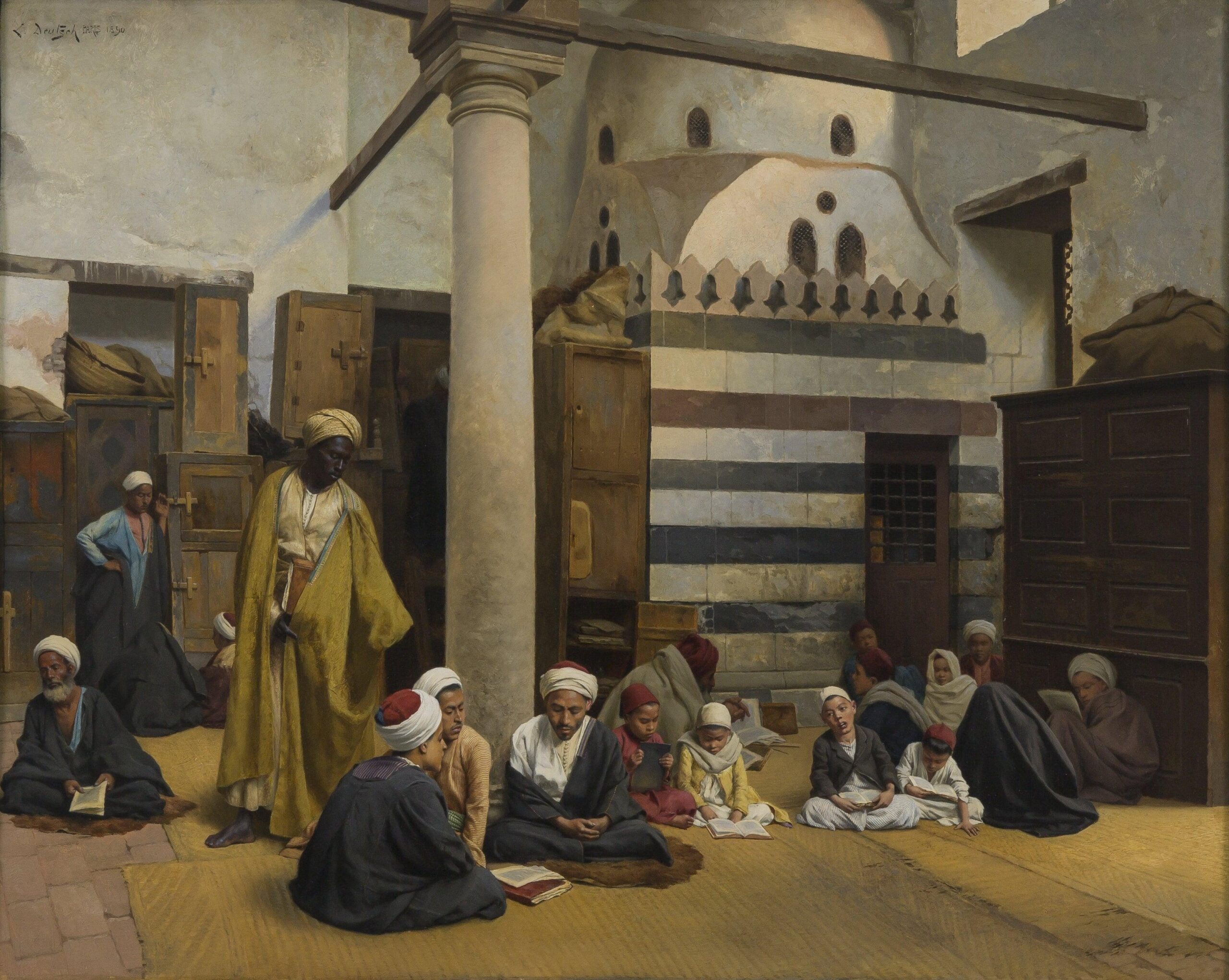
A thought on intelligence and the faithful
Summary: The article is a critique of what popular religious culture has made of God's covenant. The author targets three interlocking failures: a theology of passivity that defers all worldly excellence to the afterlife; a tangle of arbitrary restrictions that produce dysfunction rather than discipline; and a ritual culture mistaken for the substance of faith. The cumulative result, the author asserts, is a disfigured version of the Abrahamic tradition that is irrational, joyless, and incapable of producing anything of value — in this world or the next. Against this, the author invokes Ibn al-Qayyim's principle that covenantal law is inherently rational, just, merciful and beneficial, and that anything failing those tests is simply not the covenant regardless of how it is dressed up. The faithful were always meant to be people of reason and civilisational excellence — the sābiqūn at the forefront — not anxious, resistant, and intellectually paralysed. The closing lament is that we have reached a point where simply advocating the use of reason needs to be argued for at all.
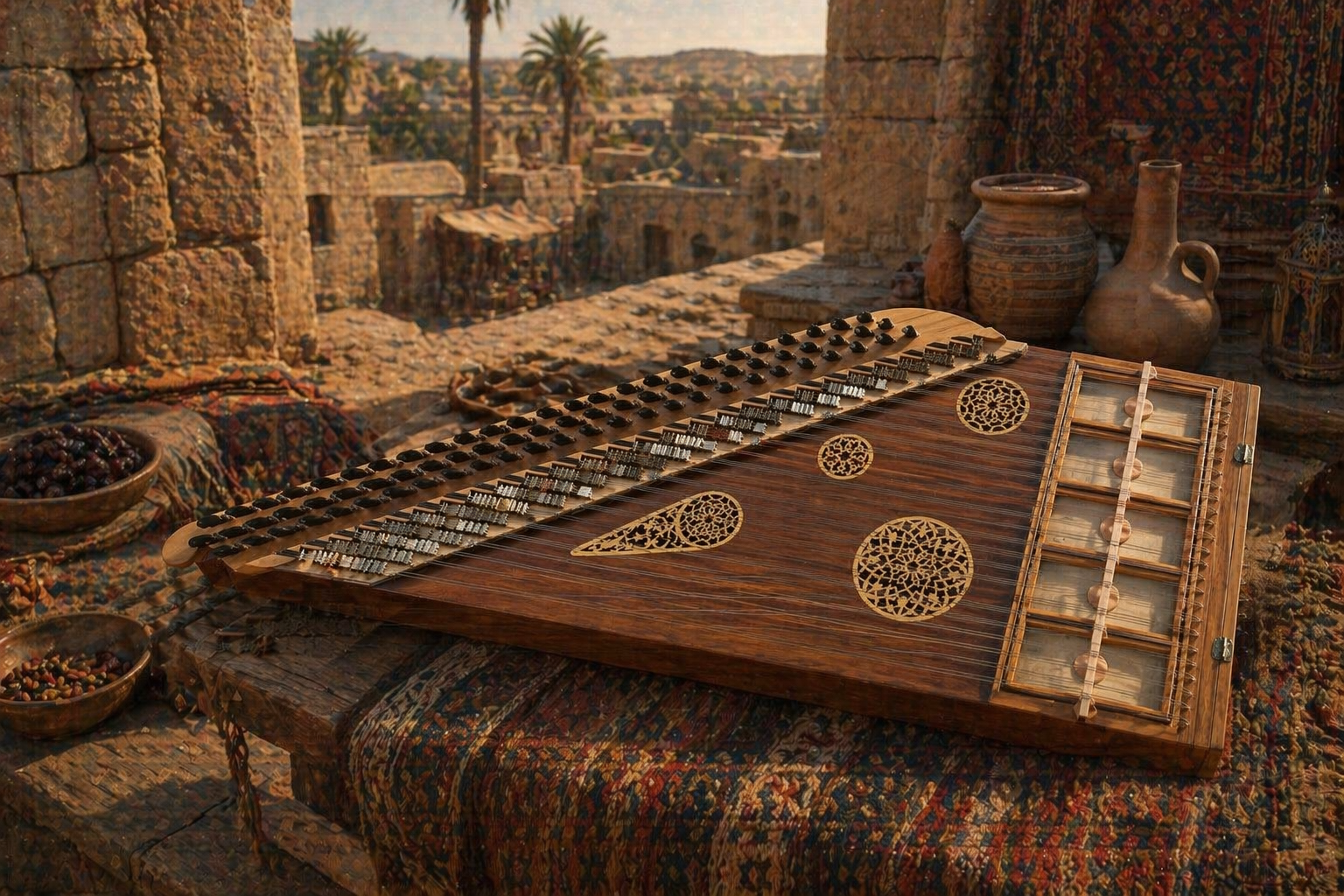
Music: Some facts of the matter
Summary: The article argues that music is generically permitted in God's law, falling into the same category as other neutral human pursuits. The default covenantal principle is that everything is lawful unless explicitly prohibited, and no such prohibition exists for melodious sound. The commonly cited Quranic verse (31:6) refers to distracting speech, not music, and the prohibitive hadith address a wider culture of indecency rather than music itself. The claim of scholarly consensus against music is flatly rejected — numerous early companions, Madinan jurists, and later scholarly giants either practised music or explicitly permitted it. The people of Madinah maintained it as a living cultural norm. The author's practical conclusion is straightforward: music is neutral, and its permissibility or otherwise depends entirely on its effect on the individual. Where it leads to harm, it becomes inadvisable; where it is beneficial, it is positively good. The insistence on blanket prohibition, the author suggests, owes more to cultural and sectarian bias than to honest engagement with the sources.
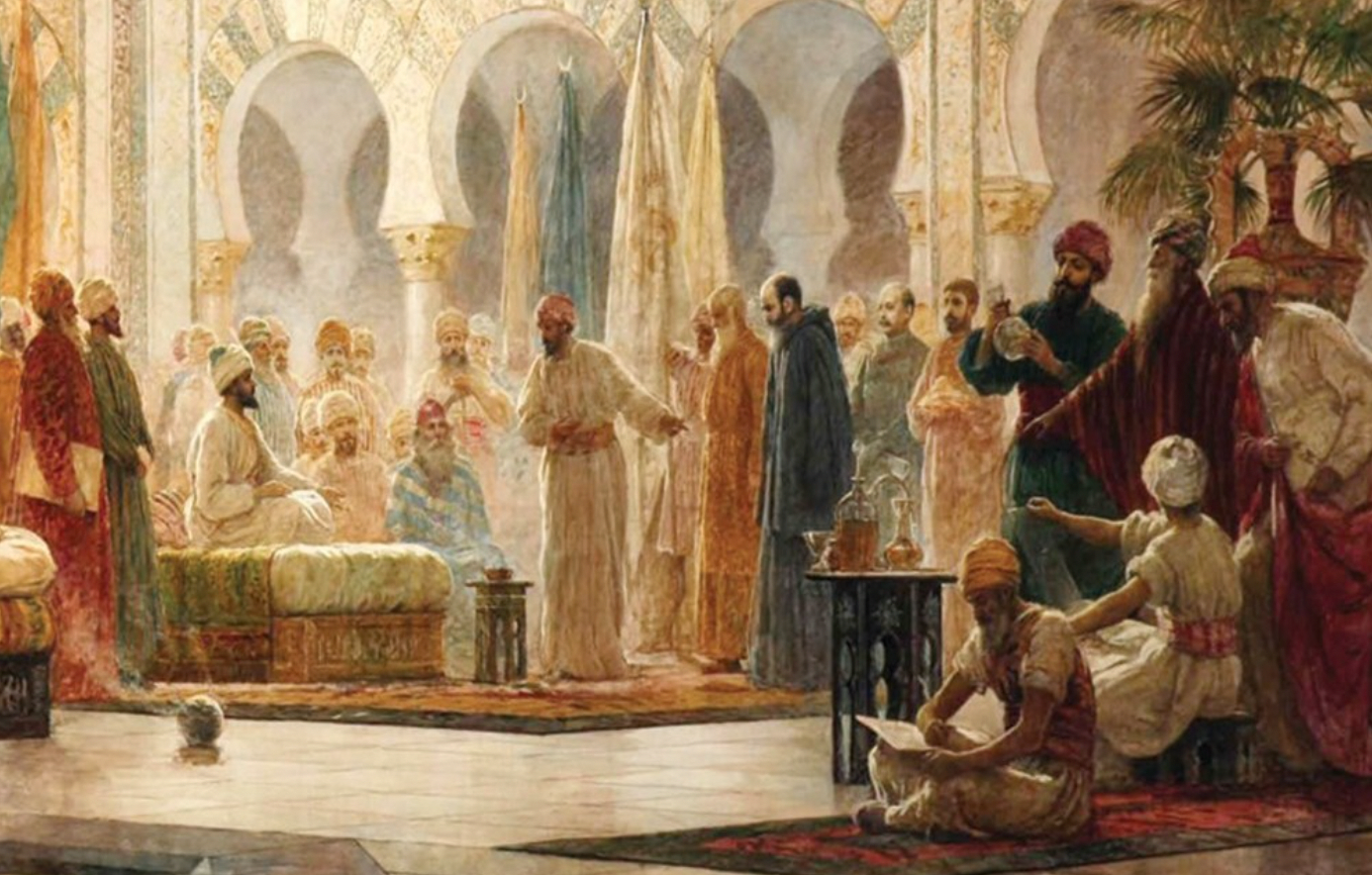
The commoners and the leaders - a medieval tale
Summary: The piece diagnoses a structural problem in how the Abrahamic covenant is communicated today. Historically, knowledge operated on a two-tier model: the illiterate masses received simplified, "spiritually"-oriented explanations designed to maintain social order, while an educated elite received the full rational, constitutional, and purposive framework of the covenantal code. Both tiers functioned appropriately within their context. Yet mass literacy has collapsed that distinction. Most people today have the cognitive capacity that once defined the elite, yet the tradition continues to deliver the medieval commoner narrative almost exclusively — superstition-adjacent, arbitrary-seeming, and stripped of rational purpose. The elite framework, though it always existed, remained niche by design and never scaled. The result is the peculiar spectacle of highly trained professionals — barristers, surgeons, consultants, teachers — who reason rigorously in their working lives but revert to an irrational register the moment "religion" is invoked. The author's argument is that this isn't an intelligence failure but a conditioning failure: people were simply never given the other narrative.
The practical stakes are twofold: the commoner narrative is losing people who find it intellectually unsatisfying, and it is failing to attract others who might otherwise engage seriously with the covenantal framework. Making the historically elite mode of understanding the mainstream default is therefore not elitism — it is catching up with a world that changed while the communication strategy didn't.

Football is polytheism?
Summary: The article dismisses the claim that football — or human-made rules generally — constitutes polytheism as illiterate and absurd. Game rules and constitutional law are categorically different things, and conflating them reflects a fundamental ignorance of covenantal legal philosophy. The deeper concern, however, is not the absurdity itself but its social consequences. The author traces how such simplistic reasoning, taken seriously by a small number of people, can escalate step by step into declarations of apostasy and justifications for violence — a pattern that has recurred across British Muslim communities for decades and contributed to real harm. Similar distortions around concepts like the caliphate and ḥākimiyyah have historically fed extremist movements and damaged civic life in the UK. The author's call is to break the cycle: educate young people — particularly those from deprived backgrounds who are most vulnerable to such recruitment — and create an environment where ignorant and corruptive ideas find no foothold.

Maturity and dialogue through debate
In the past, I’ve spent many years debating various issues with a range of people. The petulance of youth meant that I would passionately argue and over-invest myself in ‘correcting’ my interlocutor. Back and forth for hours with confrontational retorts and a highly opinionated view of one’s own deductions often leads to such behaviour, as I came to realise.
Maturity and experience changes all such foolish ways. But how so?
There are many hadith where the Prophet speaks of the traits of the young, who out of inexperience and haste, make errors and behave in ignorant ways. Patience is no virtue here, and experience has yet to mature their thinking and demonstrate how time itself is a resource - over time realisations take place and views alter. Time allows for variables to reveal themselves leading to more informed conclusions. Furthermore, it is due to immaturity that some have a high opinion of their viewpoints, those who have spent a considerable time in the realm of thinking have been privy to the experience of their staunchest views and assumptions being strongly challenged which is why maturity tends to temper self-certainty.
Upon studying with actual scholars who combine knowledge with upright conduct, I found civilised engagement to be highly beneficial. A polite debate would leave me with more rather than less, and ultimately it would open up various avenues of thinking and completely decimate any sense of parochialism. Now my intent wasn’t to prove my teachers wrong but to gain deeper insight into issues, to fill in the blanks, and cognitively evaluate systems of reasoning, highlighting what I found to be inconsistent only to identify what I might be missing. I would then go away and think deeply about the entire affair without the need to draw hasty conclusions - thoughts left to simmer for a while resulted in far deeper insights and stronger ideas than those reached hastily. I would still be left with a heavy head, but the type that helps muscles grow and not the one that you leaves you merely fatigued with little to show.
The type of learning I have expectedly benefited from most isn’t the puzzle-solving cerebral type, but where I would witness the cogency and wisdom of an verse or hadith through experience. One such was the Prophetic caution against contentiously debating scholars, arguing with the foolish, and seeking knowledge for social capital. (Ibn Mājah, al-Tirmidhi) I also found that if knowledge didn’t make you a better person in all spheres, then either you were learning the wrong thing, or you weren’t learning much at all.
The Prophet spoke of the virtue of a person who offers the covenanted prayers (salawāt maktūbah) and then sits to teach people goodness over the one who fasts all day and prays all night. It is here also that social media can be a challenging phenomenon - we must accept that people can easily be misunderstood, or fail to articulate themselves accurately, and such cognisance should logically lead to a charitable reading and interpreting things in the best possible light. But what can’t be misinterpreted is acting like a miscreant - demonstrating delinquency on social media cannot be excused by misunderstandings.
Over time I also noticed a pattern in conduct: scholars very rarely engaged idiocy (unless strongly rebuking the type directly leads to public harm) and would literally meet it with a blank expression, often simply walking off. At first I couldn’t make sense of it, it seemed rude, but I came to realise that they were simply safeguarding their own sanity and reputation, as well as denying the foolish any significance. Abu al-Ah’was stated that it used to be said: “If you argue with an idiot then you shall become like him, and if you remain silent then you are saved from him.”
So soon I came to substantially engage with the civilised type, and the benchmark should not be as low as to merely interpret civility here as someone who can communicate without insults, but those who can disagree in a mature fashion without name-calling (which tends to be the method of those who don’t actually have a point), who want to learn something from the engagement open to the idea that there might be opinion-altering variables that they haven’t yet considered. It’s the Socratic method, a form of cooperative argumentative dialogue between individuals, based on asking and answering questions to stimulate critical thinking and to draw out ideas and underlying presumptions. A cooperative exercise in the spirit of rational enquiry is where one tends to learn the most.
Muhammad b. Sirin said: “they viewed it that meaningful questions increase the intellect of a man.”
Now it’s also about engaging with a sense of disinvestment. There is rarely anything as important or game-changing so as to incite zealous fervour, and this realisation is why older people tend to be, and sometimes amusingly, extremely chilled out and nonchalant! There are certain types, especially in the context of scholarly enquiry and problem-solving, that you learn not to spend time engaging or answering at all. The first is the questioner who already feels they have a decisive answer (so what’s the actual point?) and the second are those who desire a quick fix or can't get beyond binary reasoning. If someone isn’t committed to a holistic or meaningful understanding then I'd rather not participate in dialogue, nor do I find binary reasoning of much value. Thirdly, those who have already decided what you mean: there really is no point in explaining yourself to those who are committed to misinterpreting or misunderstanding everything you have to say - usually due to extremely superficial or absurd reasons.
There are cohorts of wonderful people out there, I meet them everyday. We engage, discuss, agree and disagree, see things in a new light, or are left with food for thought. The experience is edifying, uplifting and positively challenging. If we find that not happening with our current circles, then maybe some change of scenery is in order.

Washing hair after sex
I have been repeatedly asked by numbers of believing women as to the covenantal law concerning bathing to remove sexual impurity (janābah), with the concerns around frequent bathing and the impact it can have on hair health. Problems are exacerbated in hard water areas, not only to hair but to skin, and often skin is irritated either to frequent exposure, or the elongated periods spent in the shower detangling hair under running water. For some hair types (such as particularly curly hair) repeated showers can be quite costly having to saturate hair with conditioning products to provide enough slip to reduce hair breakage.
Even after having a bath, there are persistent issues. Certain hair types can take a significant period of time to dry, and if there is a frequent need to bath due to an active sex-life or recurrent nocturnal emission, persistent wet hair can lead to illness.
These concerns are in no way modern, approximately 1400 years ago it reached Ā’ishah that Abdullāh b. Umar advised women to untie their hair if they bathed. Her response was the same as we might hear today: “How surprising of Ibn Umar! He directs women to untie their hair if they bath, he might as well direct them to shave their heads!" (Muslim)
To be sure, God has said concerning standing for prayer, "And if you are junub (sexually impure), then cleanse yourselves." (Proclamation 5:6), and to not come near salah "if you are junub (sexually impure) - though you may pass through the mosque - not until you have bathed." (Proclamation 4:43)
However, what does bathing constitute in regards to washing the hair in this context, that is, the bathing of sexual impurity (ghusl al-janābah)? The Prophet's wife Umm Salamah, asked: "Messenger of God, I'm a woman who plaits my hair, must I untie it to bathe from sexual impurity?" He said: "No, it merely suffices you that you apply three handfuls on your head then pour water over you (i.e the rest of your body) to purify.” (Muslims and Ahmad)
According to the hadith, the following suffices for purification from janabah:
- Three handfuls of water poured over the head, and then the rest of the body saturated with water;
- Plaited hair may remain plaited; hair does not need to be untied;
- There is neither a requirement to rub water into the hair (or its roots) nor saturate the length of the hair.
Now before explaining the bulleted points above, a preliminary point must be made especially for those who might have multiple baths within a very short space of time. It is not obligatory immediately after an act of intercourse; it's a condition for those who wish to engage in certain actions such as prayer, circling the Ancient House and handling the scriptures. It is not necessitated merely to talk to another person or to sleep, nor is the state of impurity transferred from one human to another by touch - the Prophet said: “the believer does not pollute (others).” (Al-Bukhāri and Muslim, narrated by Abu Hurairah)
Many of the aforementioned issues typically occur due to idea that the entire head must be saturated with water and rubbed, or that the length of the hair (to the tips) must be washed. To note, some of the assumptions are understandable given the hadith of Alī b. Abī Tālib: “I heard the Messenger of God say: whoever leaves a spot of hair from sexual impurity which water does not reach, then God shall do such and such with him from the fire.” (Ahmad, Abu Dāwud, al-Tayālīsi, and al-Bazzār.) Furthermore, the hadith of Ā’ishah offers us a general description: “If the Prophet bathed due to ritual impurity he would begin by washing his hands, then he would pour with his right hand over his left and wash his private parts. Then he would perform ablution for prayer. Then he would take water and enter his fingers into the roots of his hair, until he believed he had poured over his head with three handfuls. Then he poured water over his entire body, and then washed both feet.” (Al-Bukhāri and Muslim)
However, the hadith of Jubair b. Mut’im offers another perspective: “We were discussing the bath of janābah with the Messenger of God and he said: As for me, I take two handfuls of water and pour it over my head, thereafter I pour (water) over my entire body.” (Al-Bukhāri and Muslim) The chief Hanbali jurist Majd al-Din b. Taymiyyah wrote in al-Muntaqā, ‘It is evidence for those (jurists) who neither necessitate massaging, nor gargling, nor sniffing.’
But must the general hadiths of Alī and Ā’ishah apply? A key hadith used by jurists to argue that they do not is the narration of Umm Salamah, the wife of the Prophet, who said, “I said: Messenger of God, I am a woman who plaits my hair, must I untie it to bathe from sexual impurity? He said: No, it merely suffices you that you apply three handfuls on your head then pour water over you (i.e the rest of your body) to purify.” (Muslim and Ahmad) Based on this hadith, Ahmad b. Hanbal concluded that a woman need not untie her hair if bathing from sexual impurity (but should do so for her menses). The hadith of Umm Salamah relates to janābah whilst the Prophet said to Ā’ishah who was menstruating: “untie your hair and comb it (through).” (Al-Bukhāri)
Generally, it is the default position to untie the hair so as to ascertain water reaching that which is obligatory to wash but there are clearly allowances made for bathing from sexual impurity since it occurs often and causes both difficulty and harm. To reflect this, we find that ‘it reached A’ishah that Abdullah b. Umar was directing women to untie their hair if they bathed. She said: “How surprising of Ibn Umar! He directs women to untie their hair if they bath, he might as well direct them to shave their heads! The Messenger of God and I would bath together and I would not pour over my head more than three handfuls.’ (Muslim) The notion of ‘shaving their heads’ is predicated on the fact that frequent washing can lead to hair loss from breakage and tangling.
A similar point of view was also considered for washing the length of the hair to the roots. Whilst some jurists have viewed it as obligatory relying on the hadith “beneath every hair is janabah, so wet the hair and cleanse the skin” (Abu Dāwud and al-Tirmidhi), it has also been opined that it isn't obligatory to wash all of the hair given the response of the Prophet to the concern of having hair in plaits, “It suffices you that you apply three handfuls on your head”. As Ibn Qudāmah pointed out, ‘This does not usually soak plaited hair, for if saturation were obligatory, it would then (also) be obligatory to untie the hair so as to know that saturation had been achieved.’ (Ibn Qudāmah, al-Mughni)
An interesting point of consideration specific to janābah is whether there is a requirement to wash the hair at all. Ibn Qudamah emphatically questioned the assumption arguing the analogy that in covenantal law, the hair isn't considered a part of the animal (with humans considered articulate animals – hayawān natiq) given that hair does not become impure by death, nor is there life in it, nor is ablution negated by a man touching a woman’s hair, nor is a woman divorced by her hair (i.e. “I divorce your hair!”). Given the legal distinction between the two, it is not obligatory to wash it just as it wouldn’t be obligatory to wash her clothes merely for having worn them during sex. Ibn Qudamah’s response to the hadith used by interlocutors “drench the hair” is persuasive: al-Hārith b. Wajīh alone narrates the hadith, and his narrations are weak when narrating from Mālik b. Dīnar.
Alternatively, it may be argued that the eyebrows and eyelashes must be washed so why not the hair on the head? I assert that eyebrows and eyelashes are washed by necessity in order to reach the skin underneath which constitutes the face for which there is no concession for partial saturation; those parts of the face are only reached by washing the hair that sits on top. It essentially goes back to the maxim: that which is necessarily required to fulfill an obligation also becomes obligatory.
To be clear, the hadith of Umm Salamah is pivotal for an overview for it proposes the following:
- the prophet took into consideration the circumstances of women on this matter
- that three handfuls of water over plaited hair suffices although it neither saturates the entire head nor the length of the hair.
As indicated from the prophetic case law, faithful women are to purify themselves but without harm or injury to person, and without obstructing the needs of intimacy. A divine wisdom that becomes clear is that the purpose for frequent baths should not become the cause of subsequent troubles: the loss of desire in the husband due to the hair loss of his wife. Additionally, God has limited the possibility of covenantal law being used as the excuse to impede the rights of spouses. In order to maintain sexual attraction but also ensure purity, God lightened the burden on a woman and offered her a normative approach that wonderfully balances the benefits of intimacy with purifying for devotions to the Most High.
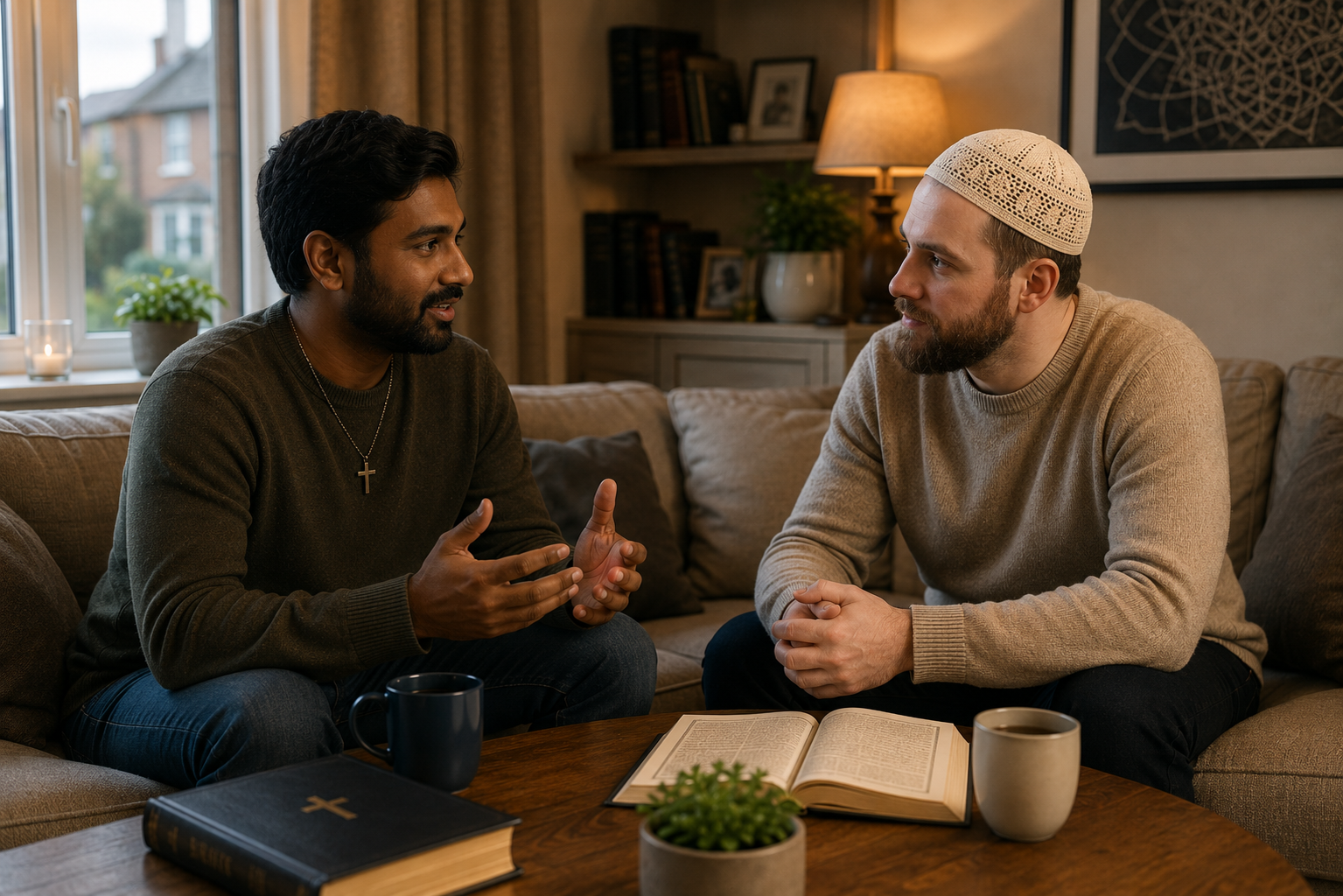
Unpicking for Christians and Muslims
Dear good Muslim and Christian friends, there is great confusion on matters of faithfulness to God and what it means. Much of it has become jumbled, and the simple and unadulterated message of God is sullied by conflations and mischaracterisation.
Allow me to unpick it for you:
1. Small "i" islām is simply an Arabic transliteration of the word submission, and in the context of the final Proclamation, it denotes submission to God like Abraham through adherence to His Code. The agent participle for it with a small “m” is muslim, and one who leans to God like Abraham is a hanīf. The Ishmaelites referred to the tradition of Abraham as Hanīfiyyah.
2. Big "i" Islam is a proper noun which denotes the modern religious phenomenon popularly called Islam. There's no fixed concept - it's more of a sociological phenomenon in which can be found folk religion, reductive law, ritualism, Mohamedenism, a superstitious outlook, and is often used as an insipid mechanism for social control.
3. There's also a cultural Islam which is an ethnicity and advocates ethno-cultural norms. Highly secular, in the western political/public space it either advocates multiculturalism or post-colonialism, and is habitually concerned with minority rights.
I advocate the tradition of Abraham, and the Covenant Code sent to his Israelite and Ishmaelite descendants as its custodians, with the completed iteration of the Code sent to the Ishmaelites via the last of God’s messengers, Muhammad, descending from the tribe of Kedar, the second son of Ishmael, the son of Abraham.
I do not care for foreign terms but substance, and whether we use Arabic, Aramaic, Hebrew or Abraham's Sumerian or Akkadian to refer to the primordial orientation is immaterial. However, since I write in the Anglophone realm, English is the natural go-to.
I do not call my big ‘m’ Muslim friends nor my Christians friends to modern and cultural Islam which has become another sect of Abraham’s religion (alongside Judaism and Christianity). The story neither started nor was defined by either Jesus nor Muhammad, but with their forefather, Abraham the friend of God.
I welcome a conversation about what we all claim:
That we serve the One True God Almighty in alignment with the tradition of Abraham and His descendants.
I don’t believe any sincere Muslim or Christian disagrees with this and once it’s explained as to where things went wrong along time, I’ve never witnessed a person not take the basic but pure path, whether scholar or layman. As has been the case for thousands of years, the Prophets taught that practical subservience to God is built on upholding the Code and abiding by the law. And as Brits, I believe we all ought to celebrate Britain’s rich and old connection with Abraham’s faith and seek to revitalise it (accurately) in this land of ours once again.
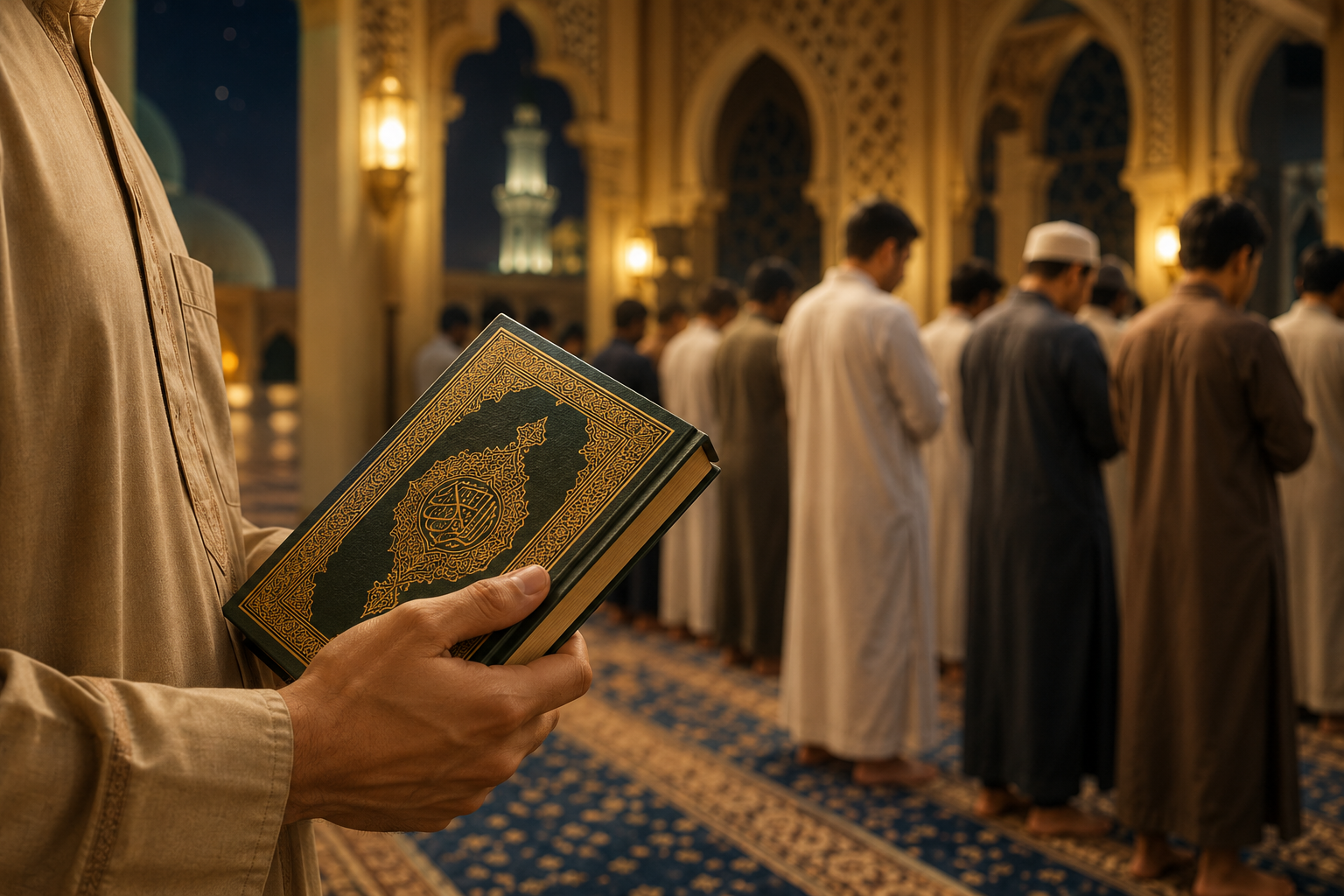
Can we hold a mushaf and perform tarāwīh/qiyām?
I strongly hold it to be perfectly permissible to do so. Ā’ishah b. Abī Bakr, the wife of the Prophet, would have her servant Dhakwān lead her in prayer from the mushaf (al-Bukhārī). There also doesn’t seem to be any explicit prohibition from doing so.
Convert or Revert?
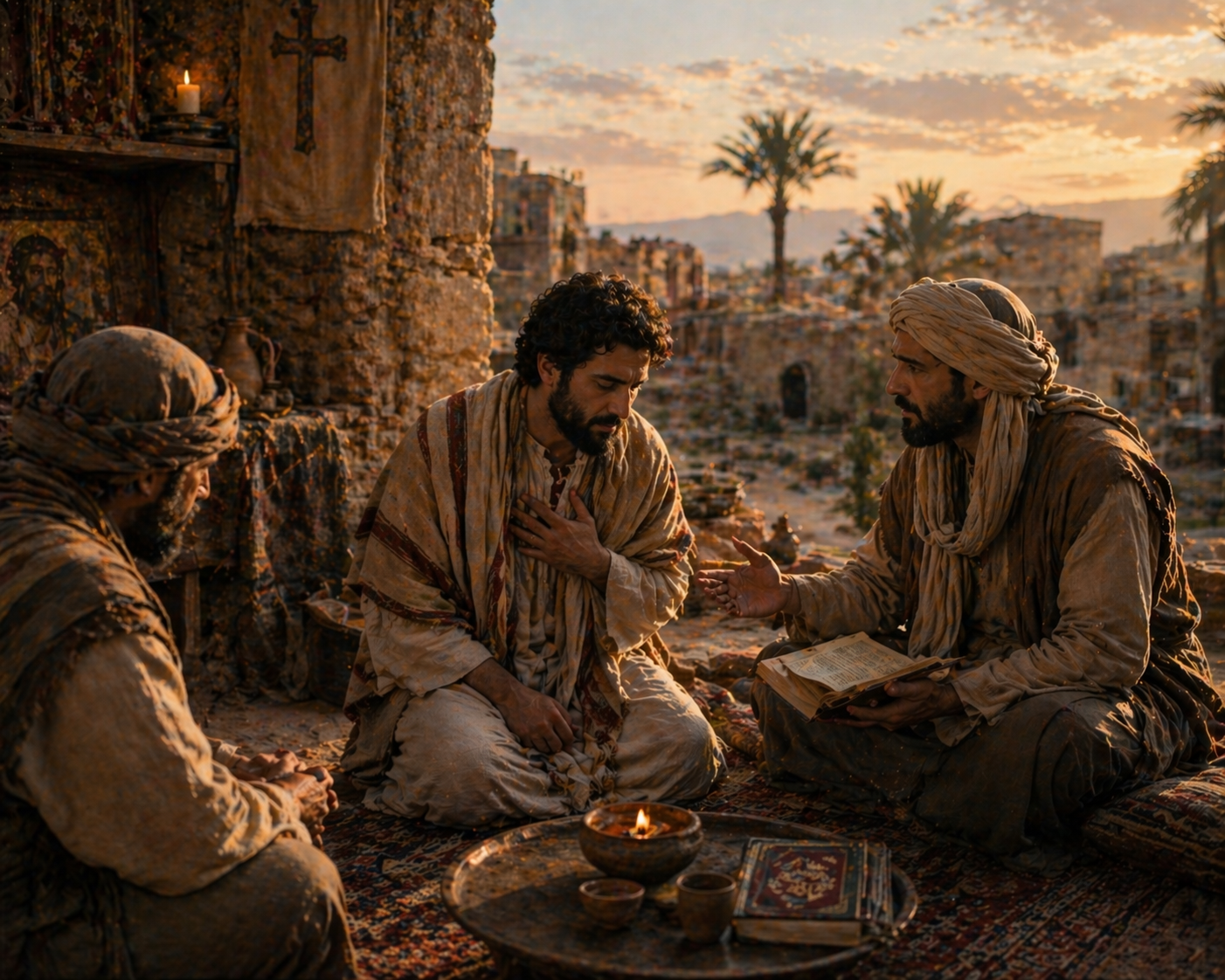
Summary: The article argues that calling new Muslims "reverts" is both linguistically and theologically indefensible. The hadith "every child is born on fiṭrah" is the usual justification, but the author contends it means humanity is predisposed toward godly subservience — not that every person was once in a state of active submission and then abandoned it. Medieval scholars like al-Nawawī and Ibn al-Qayyim are cited in support. To call someone a "revert" would logically imply they were previously believers who apostatised — an obvious absurdity. The Arabic term for submitting to God is aslama, which carries no sense of returning. Jews and Christians who accept the final message are a special case: they are better understood as progressing to an update of the same Abrahamic covenant, having always been muslimīn in disposition as 28:52-54 explicitly states. The author also criticises the English usage itself: "revert" as a noun is a linguistic invention, and its connotation of regression sits poorly with how believers ought to present themselves publicly. Finally, in the British context specifically, the label "convert" functions less as theology and more as an ethnic marker — which the author treats as a further reason to abandon it.